| |
Optimizing cure following treatment for hepatitis C among people who inject drugs: Where to next?
|
| |
| |
Editorial August 25, 2026
Download the PDF -
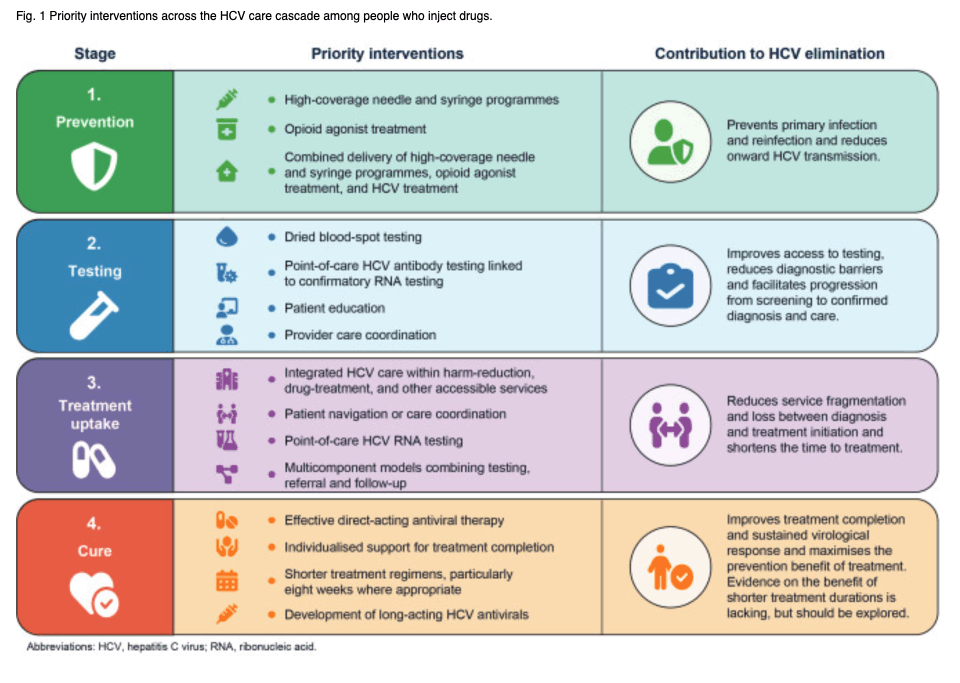
Interventions to enhance prevention, testing, treatment, and cure should now be prioritized (Fig. 1). Longer treatment durations present barriers that can be overcome by shortening treatment duration, presenting a practical and scalable intervention. In acute and chronic infection, different therapy combinations have shown high SVR with 8 weeks of therapy, albeit glecaprevir-pibrentasvir is the only therapy licensed for 8 weeks.15,16 In recent HCV infection, pilot studies have demonstrated high SVR with glecaprevir/pibrentasvir treatment durations of 6 (intention-to-treat, 90%; per-protocol, 96%)17 or 4 weeks (intention-to-treat, 78%; per-protocol, 82%).18 Cure was achieved in 100% of people receiving 4 weeks of treatment with baseline HCV RNA <6.5 log10 IU/ml.18
Long-acting HCV antiviral therapy could also enhance adherence and treatment completion and such approaches have been key additions to the HIV prevention and treatment toolkit.
New HCV therapies have been available for over a decade, but treatment numbers are declining globally.29 Although we have made great strides in the identification of interventions to enhance HCV testing and initiation of treatment for PWID,9,30 we are not that much closer to having universally defined interventions to improve SVR or reduce reinfection risk in high-risk populations. Perhaps we should look to the field of implementation science to consider a more systematic approach to identify and develop strategies to improve outcomes.31 This would include more clearly articulating patient and provider behaviors related to adherence and treatment completion, identifying enablers and barriers associated with identified behaviors, and developing strategies to address barriers and amplify enablers. Such studies should also evaluate the added value of addressing other health issues among PWID beyond viral infections.
| |
| |
| |
|
|
|


