| |
LDL-C target achievement in people living with HIV: impact of combination lipid-lowering therapy. A retrospective cohort analysis.....Overall, LDL-C target attainment remains inadequate in PWH,
|
| |
| |
AIDS August 19, 2026
Download the PDF here
Discussion
In this real-world cohort of PWH, LDL-C target attainment was suboptimal, and combination LLT played a central role in improving control, underscoring the importance of tailored, risk-adapted strategies that integrate both metabolic and HIV-specific factors, particularly for those at highest cardiovascular risk. Although LDL-C target attainment remained suboptimal, achievement improved during follow-up in parallel with increased use of LLT and a notable shift toward combination regimens.
Our findings are consistent with observations from the general population. Large European observational studies such as DA VINCI and SANTORINI have shown that fewer than one quarter of very high-risk individuals achieve contemporary LDL-C goals, largely because treatment often remains centered on statin monotherapy and combination regimens are underused . The present study extends these observations to PWH, a population in which cardiovascular risk is increased by both traditional and HIV-related mechanisms.
In this cohort, combinations were predominantly based on statin plus ezetimibe, consistent with current clinical practice, whereas regimens including bempedoic acid or PCSK9 inhibitors were less frequent.
barriers such as limited familiarity with newer lipid-lowering agents and reimbursement constraints may restrict broader implementation of combination therapy. Our findings support this paradigm and suggest that earlier use of combination LLT may improve LDL-C control in routine HIV care. cardiovascular risk in PWH extends beyond atherosclerotic disease, including heart failure phenotypes potentially linked to myocardial fibrosis and steatosis, conditions in which the nonlipid effects of statins may also be relevant.
Download the PDF here
Real-world data suggest that a large proportion of PWH fail to reach LDL-C targets with statins alone, emphasizing the need for integrated treatment strategies. However, real-world data on treatment patterns and LDL-C goal attainment in PWH remain limited.
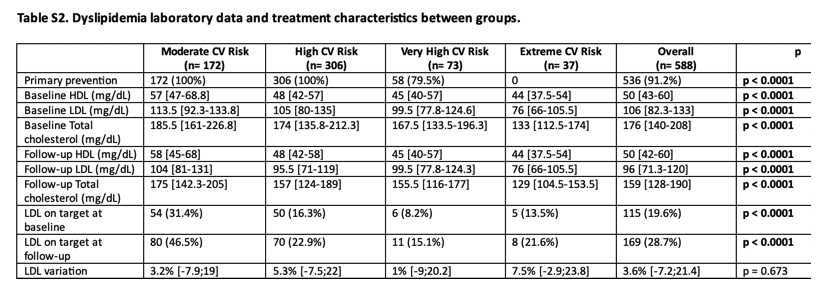
Participants at moderate risk had the highest proportion of target attainment, whereas those at high, very high and extreme risk had progressively lower proportions of patients already at target (Table S2, Supplemental Digital Content, https://links.lww.com/QAD/D951).
At follow-up, 46.5% of individuals at moderate risk achieved LDL-C targets, compared with 22.9% at high risk, 15.1% at very high risk and 21.6% at extreme risk (Table S2). Despite some temporal improvement, the proportion of participants meeting guideline-recommended LDL-C goals remained low across higher-risk categories.
Combination regimens were predominantly based on statin plus ezetimibe, accounting for 110 of 116 combination regimens at baseline and 181 of 197 at follow-up; combinations including bempedoic acid or PCSK9 inhibitors were uncommon. (Table S2, Supplemental Digital Content, https://links.lww.com/QAD/D951).
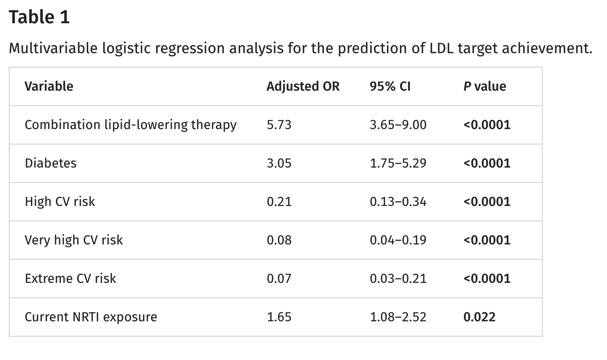
The strongest positive predictor of LDL-C target achievement was combination LLT, which was associated with an approximately six-fold increase in the odds of reaching target LDL-C levels (OR 5.7, 95% CI 3.7–9.0, P < 0.0001).
Background:
Real-world low-density lipoprotein cholesterol (LDL-C) target attainment remains low in people with HIV (PWH). Updated ESC/EAS 2025 guidelines underscore the need to reassess treatment patterns in clinical practice.
Methods:
Retrospective observational longitudinal study including PWH ≥40 years, evaluated twice between 2020 and 2025 at the Modena HIV Metabolic Clinic, with complete laboratory and clinical follow-up data. Objective was to evaluate the real-world use and effectiveness of different lipid-lowering therapy (LLT) regimens in achieving guideline-based LDL-C targets.
Results:
Among 588 PWH (71.8% male), median age was 60 years (IQR 56–64) and 97.4% had suppressed HIV viral load. According to cardiovascular (CV) risk classification, 29.3% were at moderate risk, 52% at high risk, 12.4% at very high risk and 6.3% at extreme risk. LDL-C target attainment increased from 19.6% at baseline to 28.8% at follow-up. Achievement rates declined with increasing CV risk. In multivariable analysis, combination LLT was the strongest predictor of LDL-C target attainment (odds ratio 5.7, 95% confidence interval 3.7–9.0, P < 0.0001), whereas statin dose escalation was not. Diabetes was also associated with greater odds of reaching LDL-C goals.
Conclusions:
LDL-C control remains suboptimal in PWH, particularly among those at higher cardiovascular risk. Combination lipid-lowering therapy markedly increases the likelihood of achieving LDL-C targets, supporting broader adoption of combination strategies in routine HIV care.
|
|
| |
| |
|
|
|


