| |
One Dose CVD Treatment Early Research
In Vivo Base Editing of PCSK9 with VERVE-102 for Hypercholesterolemi: one dose heart disease treatment
|
| |
| |
May 25, 2026
Download the PDF here
Download the PDF here
Conclusions
One dose of VERVE-102 led to dose-dependent, substantial, and sustained reductions in PCSK9 and LDL cholesterol levels.
Corresponding reductions in the LDL cholesterol level ranged from 9% at the 0.3-mg-per-kilogram dose to 62% at the 1.0-mg-per-kilogram dose, with an absolute reduction of 78 mg per deciliter at the highest dose. Reductions appeared to be durable throughout follow-up, which was at least 1 year in 15 participants.
Durability of CRISPR-Cas9 Gene Editing Targeting ANGPTL3 with CTX310-one dose heart disease treatment
Published August 28, 2026
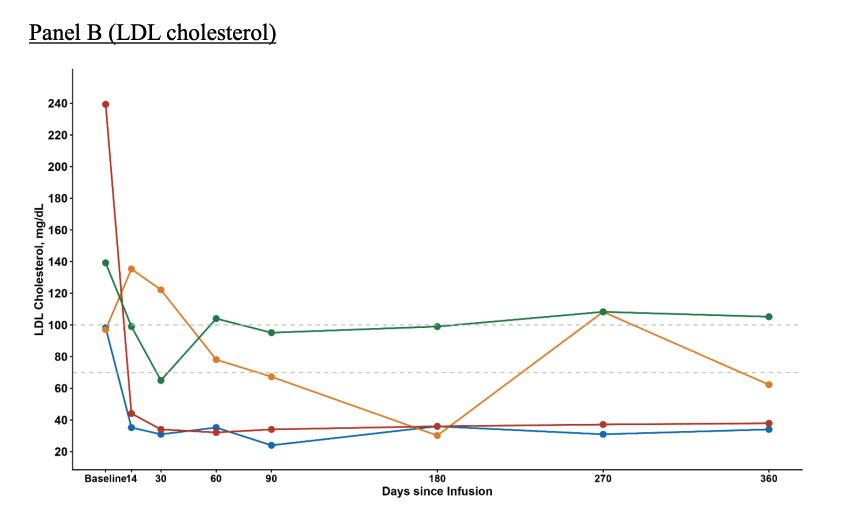
From May 2024 through August 2025, a total of 15 adults who had received a diagnosis of uncontrolled hypercholesterolemia, moderate or severe hypertriglyceridemia, or mixed dyslipidemia were enrolled in the trial and received one of five doses (0.1, 0.3, 0.6, 0.7, or 0.8 mg per kilogram of body weight) of CTX310. Here, we provide a 1-year follow-up for all trial participants.
after 1 year after treatment, among the four participants who received the highest dose of CTX310 (0.8 mg per kilogram), the mean percent change was -78.6% (range, -89.0 to -63.1) in ANGPTL3, -52.5% (range, -84.2 to -24.4) in low-density lipoprotein cholesterol, and -47.8% (range, -77.6 to -14.7) in triglycerides. Changes in individual participants are shown in Figure S2. Changes in non–high-density lipoprotein (HDL) cholesterol and HDL cholesterol were -52.0% (range, -79.4 to -25.2) and -23.5% (range, -44.9 to 0.0), respectively. Other percent changes — including -37.2% (range, -61.2 to -12.9) in apolipoprotein B and -71.7% (range, -87.8 to -56.1) in triglyceride-rich lipoprotein cholesterol — may be relevant to the potential for cardiovascular benefit. Details regarding the representativeness of the trial population are provided in Table S3. Thus, CTX310 was associated with few adverse events and produced sustained changes in the levels of ANGPTL3 and atherogenic lipoproteins at 1 year, further supporting its potential as a one-time treatment.
Download the PDF here
Download the PDF here
|
|
| |
| |
|
|
|


