| |
Medication burden and prescribing quality in older people living with HIV: Associations with quality of life
|
| |
| |
Download the PDF here
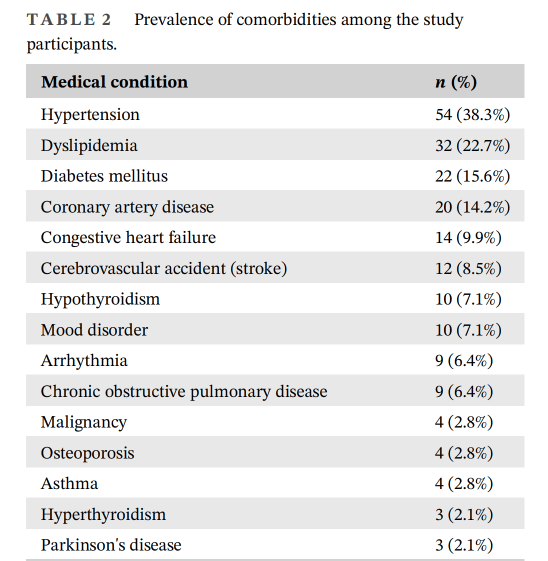
Our findings further support the concept that ageing is accompanied by an increasing burden of chronic diseases and medication use, emphasizing the need for comprehensive management of multimorbidity in older people living with HIV.
Each one-year increase in age was associated with an approximate 4.1% increase in the expected number of comorbid conditions and a 3.4% increase in the expected number of medications used (Table 4).
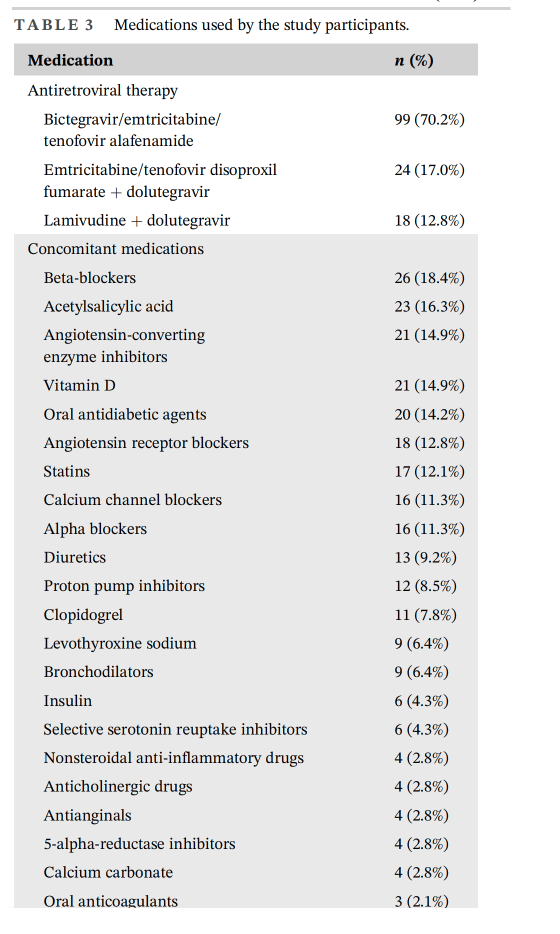
Polypharmacy was identified in 42 participants (29.8%), and DDIs were detected in 22 participants (15.6%) of the study population. The most frequently identified DDI was between bictegravir-containing antiretroviral therapy regimens and metformin.
Abstract
Objectives
To determine the prevalence of polypharmacy, drug-drug interactions (DDIs), potential prescribing omissions (PPOs) and potentially inappropriate medications (PIMs) among people living with Human Immunodeficiency Virus (HIV) aged ≥50 years and to evaluate their association with quality of life.
Methods
Participants were eligible for inclusion if they were aged ≥50 years. This cross-sectional analytical study was conducted between March and May 2025 at a tertiary infectious disease clinic. A total of 141 people living with HIV aged ≥50 years who were receiving antiretroviral therapy (ART) and under active follow-up were included. DDIs were assessed using the Liverpool HIV Drug Interactions database, while PPOs and PIMs were evaluated using the TIME-to-START and TIME-to-STOP criteria. Quality of life was assessed using the PozQoL scale.
Results
Polypharmacy was identified in 42 participants (29.8%) and DDIs in 22 (15.6%). Although PPOs were initially identified in all participants according to TIME-to-START criteria, this was largely driven by vaccination-related items. Vaccination-related items were excluded when evaluating the association between PPOs and quality of life, and the prevalence of PPOs decreased to 32.6%. PIMs were detected in 16.3%. Polypharmacy was associated with low quality of life in the health concern domain (OR 3.52, 95% CI 1.34-9.27). DDIs were associated with low overall (OR 7.65, 95% CI 2.01-29.07) and psychological quality of life (OR 14.55, 95% CI 3.45-61.37). PPOs were associated with low psychological (OR 10.67, 95% CI 2.80-40.68) and health concern domains (OR 3.19, 95% CI 1.27-8.05).
Conclusions
Medication-related problems were common among older people living with HIV. Polypharmacy, DDIs and PPOs were associated with impaired quality of life, highlighting the need for structured medication review and multidisciplinary care.
With regard to PIMs, the prevalence observed in our cohort was within the wide range reported in previous studies (9.6%-87.9%) [26]. This marked variability is likely attributable to differences in study populations, prescribing practices and the criteria used to identify PIMs. The predominance of the A7 and A8 criteria suggests that a substantial proportion of potentially inappropriate prescribing in our cohort was related to the management of hypertension. These findings highlight the importance of regularly reviewing antihypertensive therapy in older people living with HIV while taking into account individual comorbidities, treatment indications, geriatric considerations and current guideline recommendations. As hypertension management often extends beyond the responsibility of the HIV physician alone, appropriate prescribing frequently requires shared decision-making with cardiologists and internists.
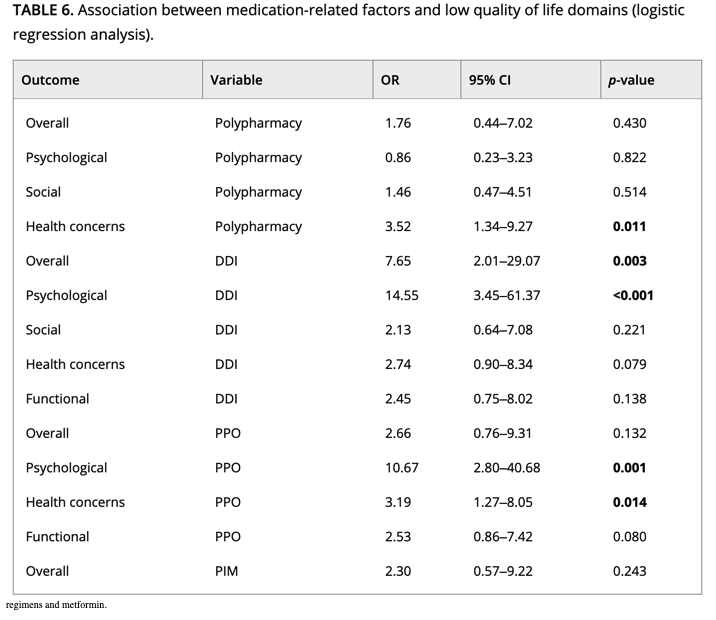
The associations between medication-related factors and quality of life domains are presented in Table 6. Polypharmacy was associated with low quality of life in the health concern domain (OR 3.52, 95% CI 1.34-9.27, p = 0.011). DDIs were associated with low overall quality of life (OR 7.65, 95% CI 2.01-29.07, p = 0.003) and with low quality of life in the psychological domain (OR 14.55, 95% CI 3.45-61.37, p < 0.001). PPOs were also associated with low quality of life in the psychological domain (OR 10.67, 95% CI 2.80-40.68, p = 0.001) and the health concern domain (OR 3.19, 95% CI 1.27-8.05, p = 0.014). No significant association was observed between PIMs and overall quality of life or any of its domains.
|
|
| |
| |
|
|
|


