| |
Prevalence and incidence of non-communicable diseases among older adults living with HIV on antiretroviral therapy in Northern Haiti: A retrospective cohort study
|
| |
| |
October 1, 2026
Download the PDF here
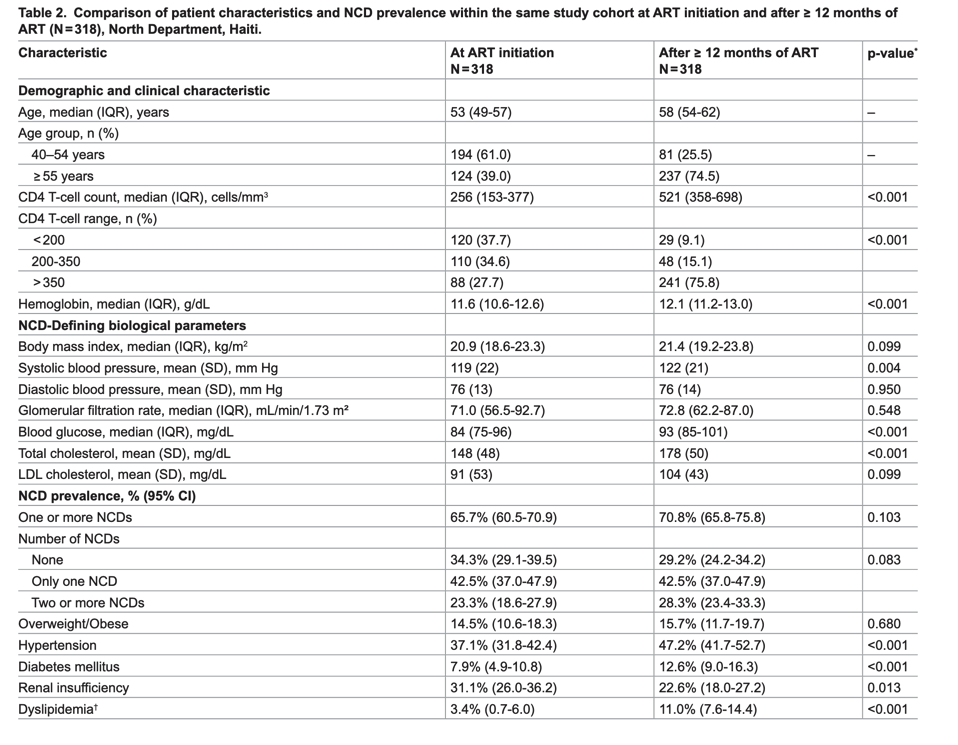
n this retrospective cohort study of older PLHIV in Northern Haiti, we found a high prevalence of NCDs, with over 65% of individuals having one or more NCDs at ART initiation, while 15 (13.8%) had two or more. he most fre-
quently observed new-onset NCDs were hypertension (21.1%), renal insufficiency (17.4%), and overweight/obesity
(15.6%). The cumulative incidences for dyslipidemia and diabetes were 7.3% and 5.5%, respectively.. Notably, the burden of new disease was also substantial: among individuals free of any NCD at baseline, over half developed at least one incident comorbidity within the follow-up period. Our findings emphasize the need for healthcare providers to prioritize integrated care models that combine HIV and NCD management, routine screening, and patient education to improve long-term health outcomes.
Abstract
The growing burden of non-communicable diseases (NCDs) among aging people living with HIV (PLHIV) represents a major public health challenge, yet data to guide integrated care in Haiti remain limited. To address this gap, we conducted a retrospective cohort study of PLHIV aged 40 years and older receiving care at two hospitals in northern Haiti. Using electronic medical record data from routine HIV clinical visits between July 1 and September 30, 2015, we compared NCD prevalence at ART initiation and after ≥12 months of follow-up. We also identified baseline risk factors associated with incident NCDs, with a secondary analysis focused specifically on predictors of incident renal insufficiency.
Among 318 participants, 65.7% had one or more NCD at ART initiation, increasing to 70.8% after ≥12 months.
The prevalence of hypertension rose from 37.1% to 47.2% and diabetes from 7.9% to 12.6%, while overweight/obesity remained stable (14.5% to 15.7%). In contrast, renal insufficiency prevalence decreased from 31.1% to 22.6%. In the adjusted analysis, female sex was the sole independent predictor for developing at least one incident NCD (AOR: 3.29; 95% CI: 1.40-7.72). In the secondary analysis for incident renal insufficiency, female sex (AOR: 5.88; 95% CI: 1.78-19.50) and elevated systolic blood pressure (AOR: 1.052; 95% CI: 1.005-1.101) were the only significant predictors. A high proportion of older PLHIV in northern Haiti are affected by NCDs. These findings underscore the need for integrated care models, particularly for older women living with HIV, who appear to be at the highest risk for developing new NCDs.
|
|
| |
| |
|
|
|


